


You're Exhausted. Your Feet Are Screaming. And You Still Have 6 Hours Left.
Every insole you've tried goes flat by hour 4. ShiftSoles use E-TPU Micro-Spring Technology — the same rebound science used in elite athletic footwear, now built for the nursing floor. Same cushion at hour 12 as hour 1. Guaranteed.
90-Day Money-Back Guarantee · No Risk

"I Told Myself It Was Just Part of the Job."
It started small. A little ache in the heel at the end of a long shift. Nothing serious. You're a nurse — you push through. You've pushed through worse. So you ignored it.
Then it got harder to ignore. By month three, you were hobbling to your car after every shift. You'd sit in the parking lot for a few minutes before driving home, just to let your feet stop throbbing. You told yourself everyone felt this way. That this was just what nursing was.
You tried everything. Gel insoles from the pharmacy. The expensive ones your colleague swore by. Compression socks. Different shoes. You even saw a podiatrist who gave you stretches to do. Some things helped — for a week, maybe two. Then you were right back where you started.
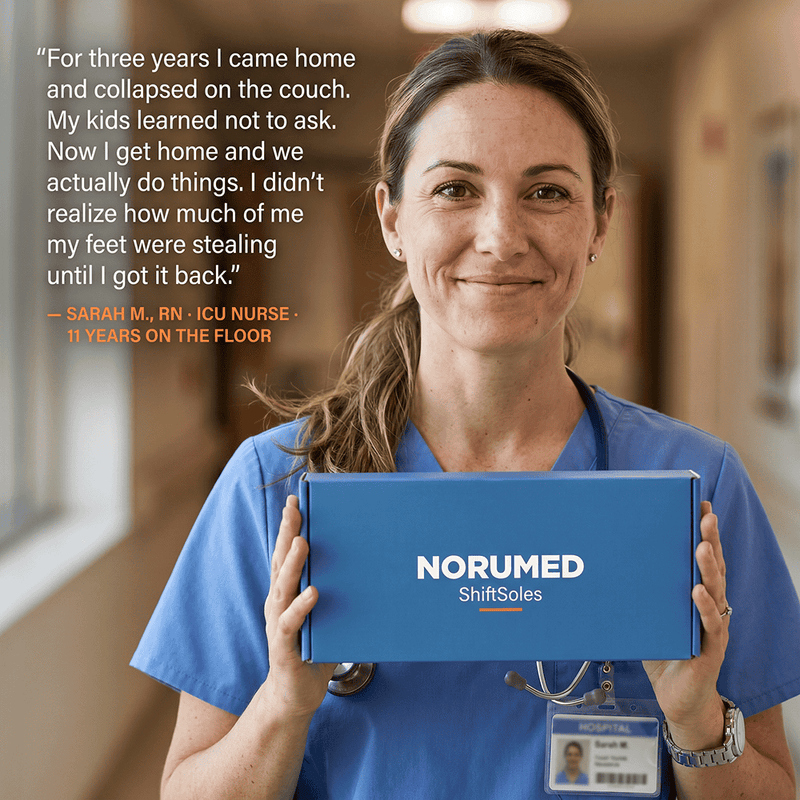
The worst part wasn't the pain itself. It was what the pain was stealing from you. You'd get home and your kids would want to play, and you just... couldn't. You'd sit on the couch with your feet elevated, watching them, feeling guilty. Your days off became recovery days instead of living days.
At some point, you stopped expecting things to get better. You just started managing. Counting down the hours. Dreading the next shift before the current one was even over.
Sound familiar? Then keep reading. Because what you're about to learn changes everything.
The Real Reason Your Feet Still Hurt After Every Shift
It's not that you haven't found the right insole yet. It's that the insole industry has been designing for office workers — not for people who stand on hard floors for 12 hours straight.
Gel Insoles Feel Great — For 2 Hours
Gel disperses impact well when it's fresh. But gel is still a fluid trapped in foam. After sustained pressure, it migrates to the edges and leaves the center flat. By hour 6, the gel is gone from where you need it most.
Memory Foam Conforms — Then Stays Conformed
That's the problem. Memory foam is designed to hold its compressed shape. That's what makes it feel 'custom' at first. But it means by hour 4, it has permanently molded to your foot in a compressed state. There's no rebound.
Compression Socks Help Circulation — Not Cushion
Compression socks are excellent for blood flow and swelling. They do nothing to absorb the 1.5× body weight impact that hits your heel with every step on a hard hospital floor. They solve a different problem.
Custom Orthotics Are Expensive — And Still Foam
A $400 custom orthotic is a precisely shaped piece of foam. It distributes pressure better than a generic insole. But the material is still foam. It still permanently compresses. It still goes flat. You're paying for the shape, not the longevity.
The problem isn't you. The problem is the material. Every solution above uses foam — and foam permanently compresses. That's a physics problem, not a product quality problem.
It's Not Your Feet. It's the Foam.
Here's the truth the insole industry doesn't want you to know: every standard insole — regardless of price — is made from the same basic material: memory foam or EVA foam. And both of them share one fatal flaw.
Foam compresses under weight and stays compressed. Think of a sponge you squeeze and leave under a book. After a few hours, it stops bouncing back. By hour 4 of your shift, you're essentially standing on a flat piece of cardboard. The cushion is gone. The support is gone. And the damage to your plantar fascia, knees, and lower back accumulates with every step.
This isn't a design flaw that was overlooked. It's a design choice that was never corrected, because the people designing insoles have never spent 12 hours on a hospital floor. They designed for the office worker, the casual walker, the weekend hiker. They never designed for you.
It is not your fault that nothing has worked. You were given the wrong tool for the job. Every single time.
The question isn't whether you need better insoles. The question is: what material actually holds up under the conditions you work in? What technology was built to handle 12 hours of continuous pressure without flattening?
The answer exists. And it's been hiding in plain sight inside elite athletic footwear for years.
Meet E-TPU Micro-Spring Technology
The same rebound science used in world-class marathon shoes — now engineered specifically for the nursing floor.

E-TPU stands for Expanded Thermoplastic Polyurethane. During manufacturing, TPU granules are heated under pressure until they expand — like popcorn — growing up to 10x their original size. Each bead contains thousands of sealed micro-cells.
Here's why this matters: when you step down, the beads compress and absorb the impact. The moment your foot lifts, they spring back to full volume instantly. Not slowly, like foam. Instantly. Every single step. Every single hour.
Because the micro-cells are sealed, they cannot absorb moisture or permanently deform. There is no "break-in period" where they go flat. The bead at hour 12 behaves identically to the bead at hour 1.
Standard foam fails because it permanently compresses. E-TPU beads cannot permanently compress — it's physically impossible given their closed-cell structure. This is not a marketing claim. It is materials science.
ShiftSoles: Built Exclusively for Nurses
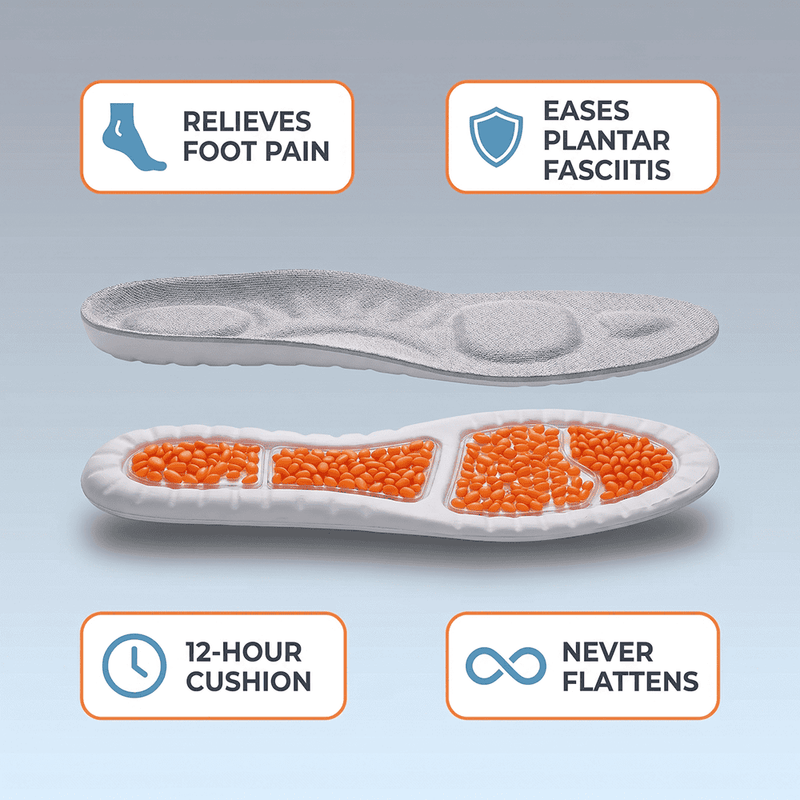
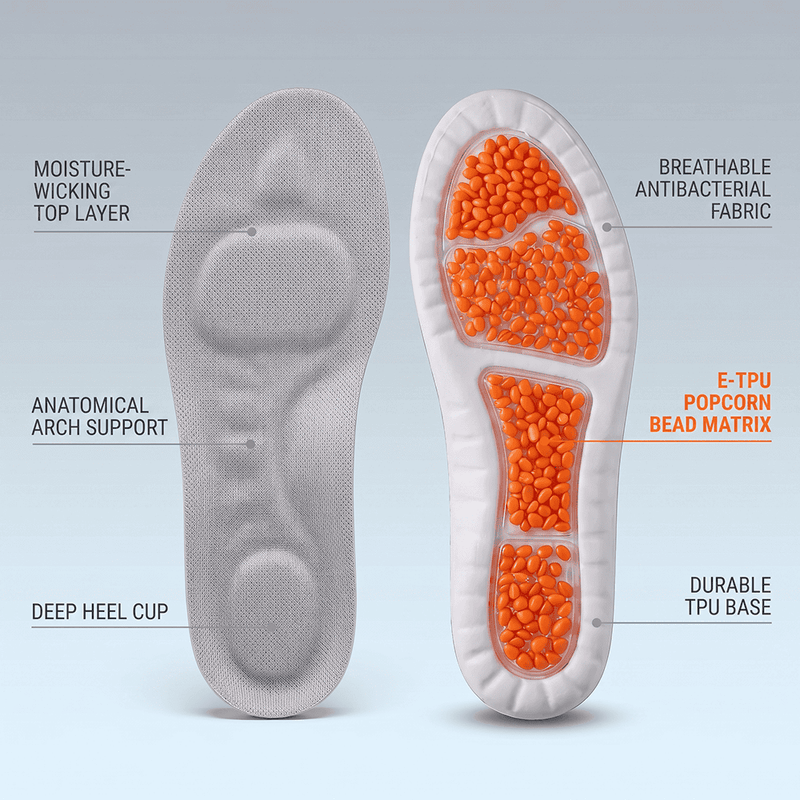
E-TPU Micro-Spring Bead Matrix
Thousands of orange E-TPU beads cover the entire footbed. Each bead compresses and rebounds independently — continuous, even cushioning from heel to toe for the full 12 hours.
12-Hour Rebound Guarantee
We guarantee your ShiftSoles provide the same cushion at the end of your shift as the beginning. If they flatten before 12 hours, we replace them free. No questions asked.
Podiatrist-Designed Arch Support
Deep heel cup and anatomical arch contour designed to reduce plantar fascia strain. Calibrated specifically for nurses who spend extended time on hard floors.
Medical-Grade Moisture-Wicking
Breathable antibacterial fabric draws sweat away and prevents odor — even inside non-breathable nursing clogs during a full 12-hour shift.
Full-Palm Shock Distribution
The bead matrix distributes impact evenly across your entire foot, eliminating pressure hotspots that cause plantar fasciitis, heel spurs, and knee and back pain.
12–18 Month Durability
Because E-TPU beads cannot permanently compress, ShiftSoles last 3× longer than standard foam insoles. Most nurses replace theirs once a year, not every few months.
Regular Foam vs. ShiftSoles at Hour 12
The difference becomes visible after hour 4.
"I Finally Finished a Shift Without Counting Down the Minutes."
 ★★★★★
★★★★★
"ShiftSoles are the first insole I've ever worn that still feel like new at hour 12. My plantar fasciitis hasn't flared up in 8 weeks. I went for a walk with my daughter after a night shift last week. I haven't done that in two years."
 ★★★★★
★★★★★
"Hour 10 and my feet still feel supported. That has NEVER happened before with any insole. I've been telling every nurse on my floor about these."
 ★★★★★
★★★★★
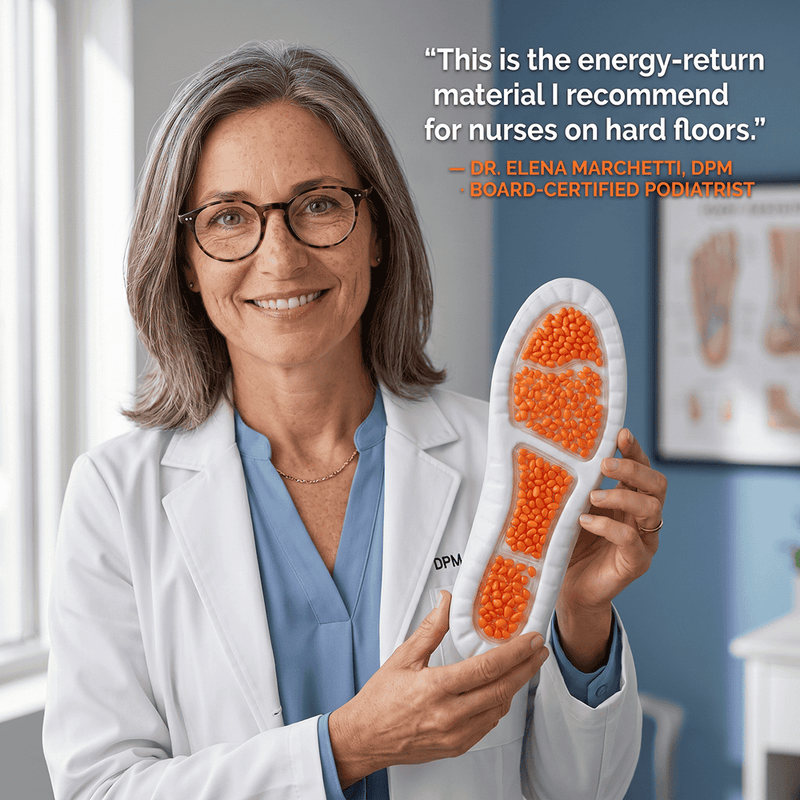
"My podiatrist told me to find insoles with 'energy return.' I showed him ShiftSoles. He said this is exactly what he'd recommend. Coming from a podiatrist, that means everything."
 ★★★★★
★★★★★
"I ordered the 3-pack so I can rotate between all my shoes. Best decision I've made for my career in years. The cushion genuinely does not go away."
Get Your ShiftSoles Today
Join 2,400+ nurses walking every shift pain-free.


Choose Your Bundle
What the Next 90 Days Look Like
This is what 2,400+ nurses have experienced. This is what's waiting for you.
First Shift
You notice the cushion feels different — springy, not just soft. Something feels different.
The 10-Hour Moment
You're at hour 10 and your feet still feel supported. You check the clock twice.
Drive Home Changes
No more sitting in the parking lot waiting for the throbbing to stop.
Life Comes Back
Plantar fasciitis easing. Knee and back pain reduced. You go for a walk after a night shift.
New Normal
ShiftSoles are just part of your uniform. You're the one telling every new nurse about them.
Now Try the One Thing That Was Actually Built for You.
Every shift you do without ShiftSoles is another shift of unnecessary pain. Another drive home in agony. Another evening on the couch instead of with the people you love. You've been given the wrong tool. It's time to use the right one.
We've Got You Covered
Honest answers to the questions nurses ask most before ordering.
2,400 Nurses Can't Be Wrong
"Night shifts are brutal because you're standing still more than walking. I thought nothing would help that. ShiftSoles still cushion even when you're stationary. The moisture-wicking fabric is a bonus — no more sweaty feet inside my clogs."
"I stand in one spot for 6–8 hour surgeries. My feet used to cramp so badly I'd have to shift weight constantly. With ShiftSoles, the cramping is gone. My whole team has noticed I'm less irritable by the end of long cases."
"I was the biggest skeptic on my floor. I told my colleague these looked gimmicky. She dared me to try them for one shift. I ordered two more pairs that same night. The orange bead thing is not a gimmick. It's real."
"I've been a charge nurse for 6 years. I now recommend ShiftSoles to every new nurse on orientation. Foot pain is the number one reason nurses leave the floor early. These help. Genuinely."
"I'm on my feet for 13-hour shifts. I started wearing ShiftSoles 3 months ago. My lower back pain — which I thought was unrelated — has improved significantly. Turns out it was coming from my feet the whole time."
"Twenty years of nursing and I've never found an insole that lasts the whole shift. Until now. I'm retiring in two years and I wish I'd found these at the start of my career. Don't wait like I did."
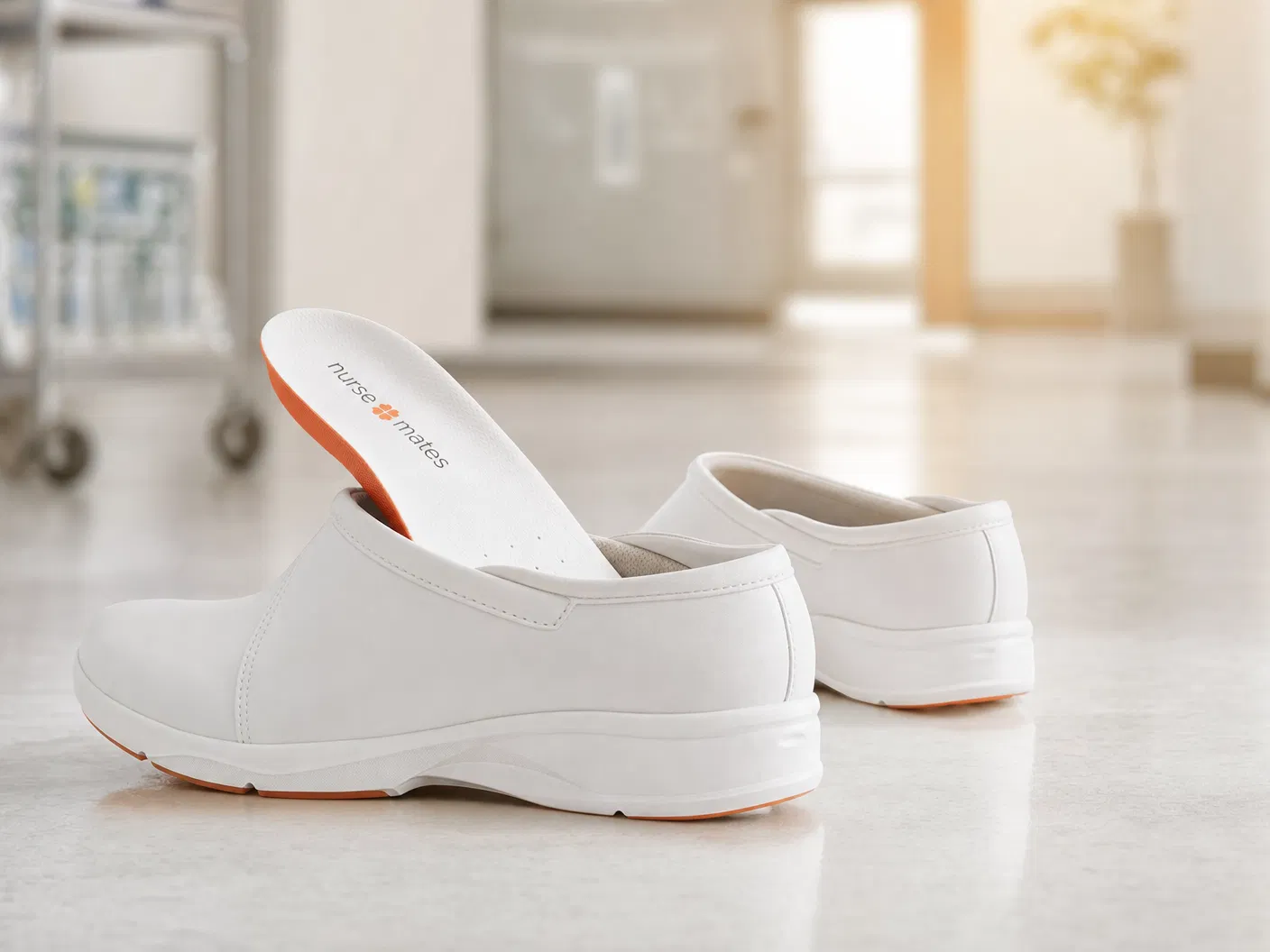
You Take Care of Everyone Else. Let ShiftSoles Take Care of You.
You've read this far because you're tired of hurting. You deserve to finish your shift feeling like a human being — not a pair of aching feet. The next step is simple.
90-Day Money-Back Guarantee · Podiatrist-Approved